Tracing the Impact of Venue Conditions on Probability Shifts in International Athletic Events
Written by Erik Simon · Aug 19, 2026
Tracing the Impact of Venue Conditions on Probability Shifts in International Athletic Events
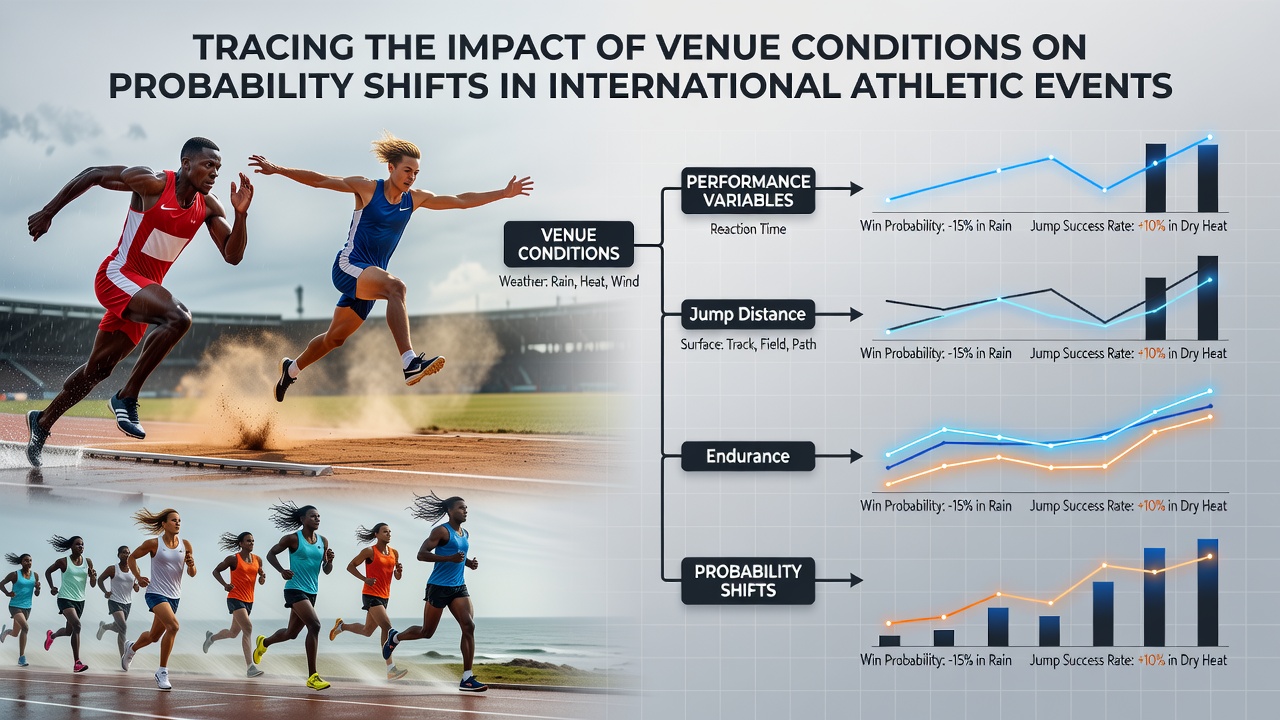
Venue conditions shape performance outcomes in international athletic events through measurable environmental and structural variables that alter expected results and shift probability distributions across competitions. Researchers track these factors because they influence endurance, speed, recovery rates, and tactical decisions in sports ranging from distance running to team-based events like football and basketball. Data from multiple Olympic cycles show consistent patterns where altitude, temperature, humidity, surface type, and spectator density correlate with deviations from baseline performance metrics established at sea-level or neutral venues.
Altitude as a Primary Driver of Physiological Shifts
High-altitude venues reduce oxygen availability, which forces athletes to adjust pacing strategies and accelerates fatigue in aerobic-dominant disciplines. The 1968 Mexico City Olympics demonstrated this effect when world records fell in sprint and jump events yet longer-distance races produced slower times than sea-level predictions indicated. Subsequent studies quantified the impact through hemoglobin saturation levels and lactate thresholds, revealing that athletes unacclimatized to elevations above 2,000 meters experience probability reductions of 10 to 25 percent in endurance events according to physiological modeling from institutions such as the Athletics Canada research division.
Modern competitions continue to reflect these dynamics. Preparations for events scheduled in August 2026 incorporate altitude simulation chambers and staged acclimatization protocols because governing bodies recognize that unadjusted athletes face elevated injury risks and reduced win probabilities. Teams that integrate these adjustments report narrower gaps between projected and actual outcomes in multi-stage tournaments.
Weather Variables and Their Cumulative Effects
Temperature extremes and humidity levels alter thermoregulation, sweat rates, and muscle contraction efficiency across athletic disciplines. Hot and humid conditions increase core body temperature faster, which shortens sustainable effort durations in events lasting longer than 90 seconds. Cold environments stiffen muscle tissues and reduce joint mobility, elevating the chance of early-race positioning errors in track events. Meteorological data integrated with performance databases from the Australian Institute of Sport demonstrate that dew-point thresholds above 20 degrees Celsius shift marathon finishing-time distributions by several minutes compared with drier conditions at equivalent temperatures.
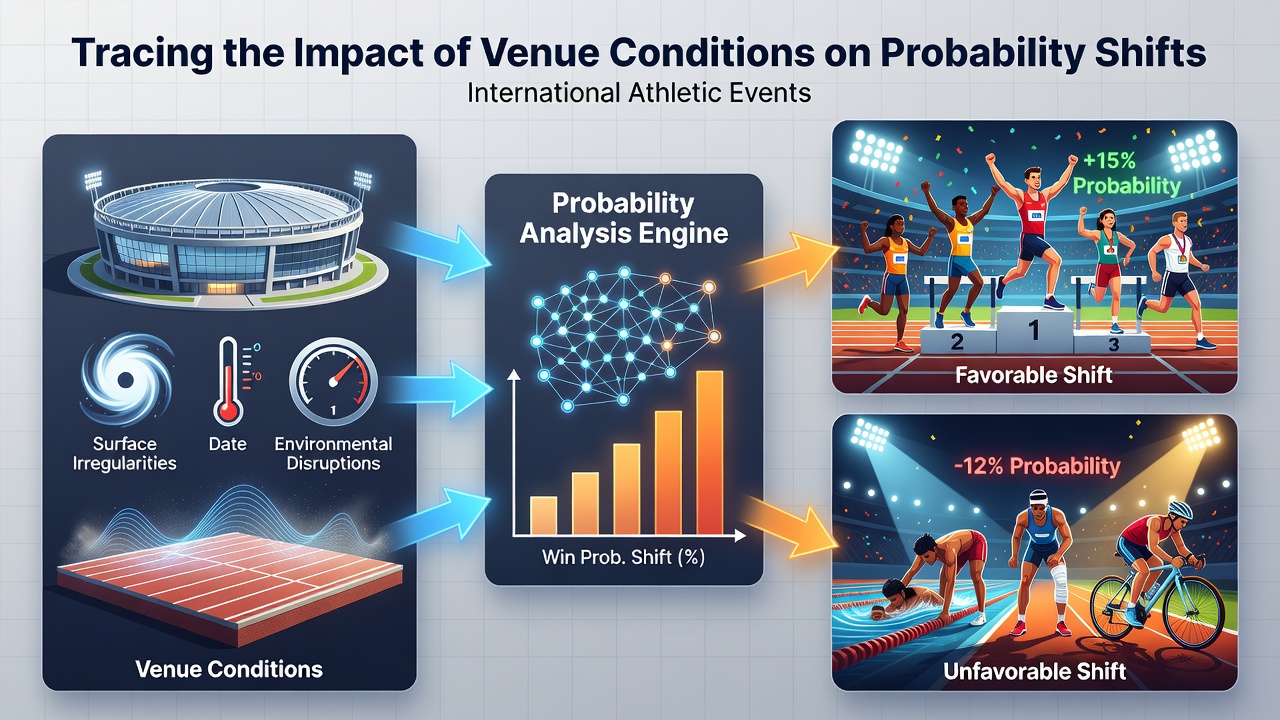
Precipitation further modifies surface friction coefficients, which affects acceleration phases in sprinting and directional changes in field sports. Organizers now publish real-time environmental dashboards during major championships so analysts can update probability models before each session begins. These updates allow for dynamic recalibration rather than reliance on static pre-event forecasts.
Surface Composition and Equipment Interactions
Track and field surfaces vary in energy return characteristics, spike penetration depth, and heat absorption rates. Mondo tracks used at recent World Athletics Championships deliver consistent rebound properties that favor athletes with high stride frequencies, whereas older asphalt or cinder surfaces dissipate more kinetic energy. Equipment regulations interact with these surfaces because shoe cushioning and sole rigidity produce different ground reaction forces depending on the underlying material. Observers note that probability models incorporating surface hardness indices predict medal outcomes more accurately than those limited to athlete ranking data alone.
Crowd Density and Acoustic Influences
Spectator numbers and venue acoustics generate measurable psychological and physiological responses. Home-venue advantages documented across Olympic basketball and football tournaments correlate with elevated testosterone levels and reduced decision-making latency among home athletes. Noise levels above 100 decibels have been shown to mask auditory cues used by sprinters for reaction timing while simultaneously increasing arousal states that benefit power-based actions. International federations collect venue-specific crowd data to refine officiating protocols and to inform medical staff about stress-related performance variables during peak attendance periods.
Integrated Modeling Approaches in Current Practice
Statistical frameworks now combine venue metadata with historical performance records to generate updated probability surfaces before each round of competition. Machine-learning ensembles trained on data from the 2020 Tokyo and 2024 Paris Games incorporate interaction terms for altitude-humidity combinations and surface-crowd pairings. These models output revised win probabilities that betting markets and national federations monitor in real time. The approach replaces earlier reliance on single-variable adjustments and yields narrower confidence intervals around projected medal tables.
Conclusion
Venue conditions exert quantifiable influence on athletic probabilities through interconnected physiological, mechanical, and psychological pathways. Organizations that systematically record and model these variables produce forecasts that align more closely with observed results across successive international cycles. Continued refinement of environmental monitoring and acclimatization strategies supports more precise planning for events scheduled through 2026 and beyond.