Roster Shifts and Their Ripple Effects on Betting Markets in Soccer, Basketball, and Beyond
Written by Elena Günther · Aug 21, 2026
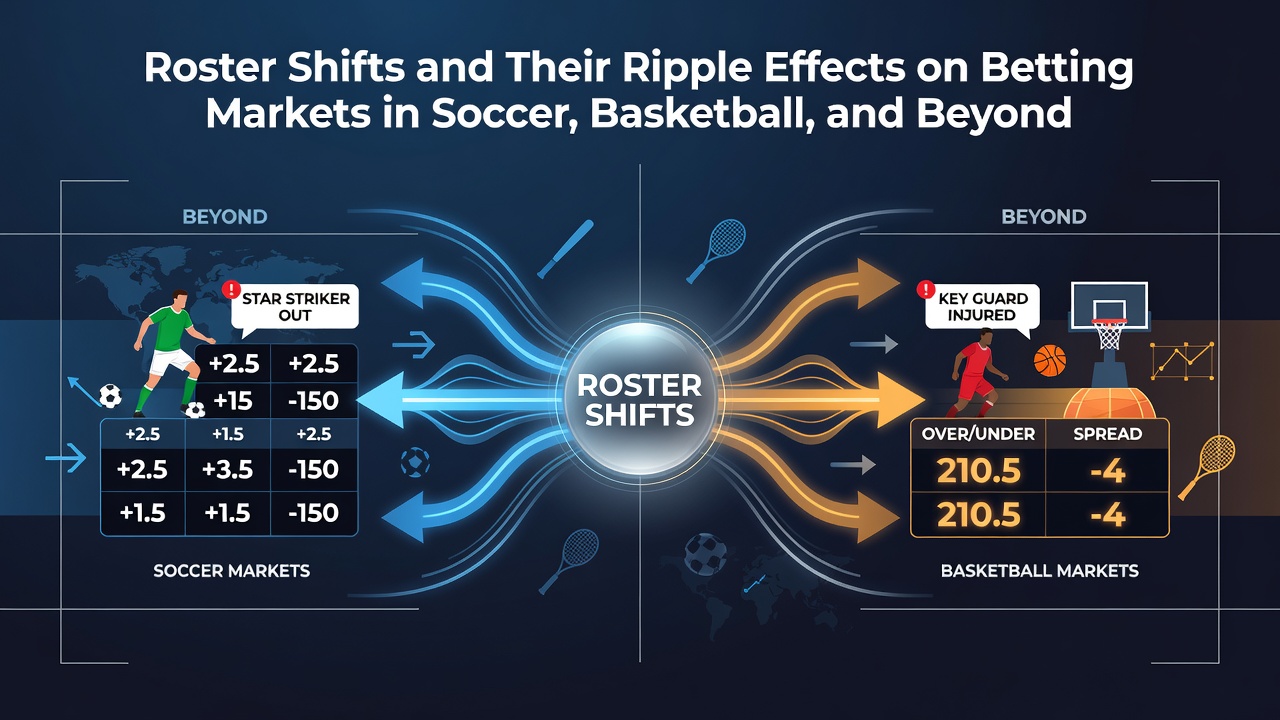
Roster Shifts and Their Ripple Effects on Betting Markets in Soccer, Basketball, and Beyond
Team lineups change constantly across professional sports, and these adjustments send immediate signals through betting markets that cover soccer, basketball, and other major competitions. Observers note that when clubs announce injuries, trades, or suspensions, oddsmakers respond by recalibrating probabilities, while bettors who follow roster data adjust their positions before lines stabilize. Data from industry reports shows these movements often occur within minutes of official announcements, creating measurable shifts in both money wagered and final odds offered to the public.
Soccer Roster Dynamics and Market Adjustments
European soccer leagues experience roster flux through summer transfer windows, mid-season injuries, and disciplinary actions, each of which alters expected goal totals and match outcomes. In August 2026, several Premier League sides face tight deadlines to finalize squads before the window closes, and historical patterns indicate that late additions or key departures correlate with rapid revisions in over-under markets. Researchers at academic institutions have tracked how the absence of a primary striker changes implied probabilities by several percentage points, prompting sportsbooks to widen spreads on total goals while volume increases on the opposing side.
Defensive absences produce similar but distinct effects. When a starting center-back receives a red card suspension, bookmakers typically lower the clean-sheet probability for that team, and data indicates corresponding increases in bets placed on the opponent to score first. Those who monitor training reports and official injury lists often identify these adjustments earlier than casual participants, leading to concentrated action that further moves the line before kickoff.
Basketball Trades, Injuries, and Point-Spread Reactions
NBA and Euroleague teams encounter frequent roster turnover through trades, load management decisions, and long-term injuries, each of which influences point spreads and player prop markets. When a franchise player sits out for rest during the regular season, betting limits on related props often drop while the total points line moves several points in response to projected efficiency changes. Studies compiled by research organizations reveal that back-to-back game absences create predictable patterns in away-team under bets, especially when travel schedules compound fatigue factors.
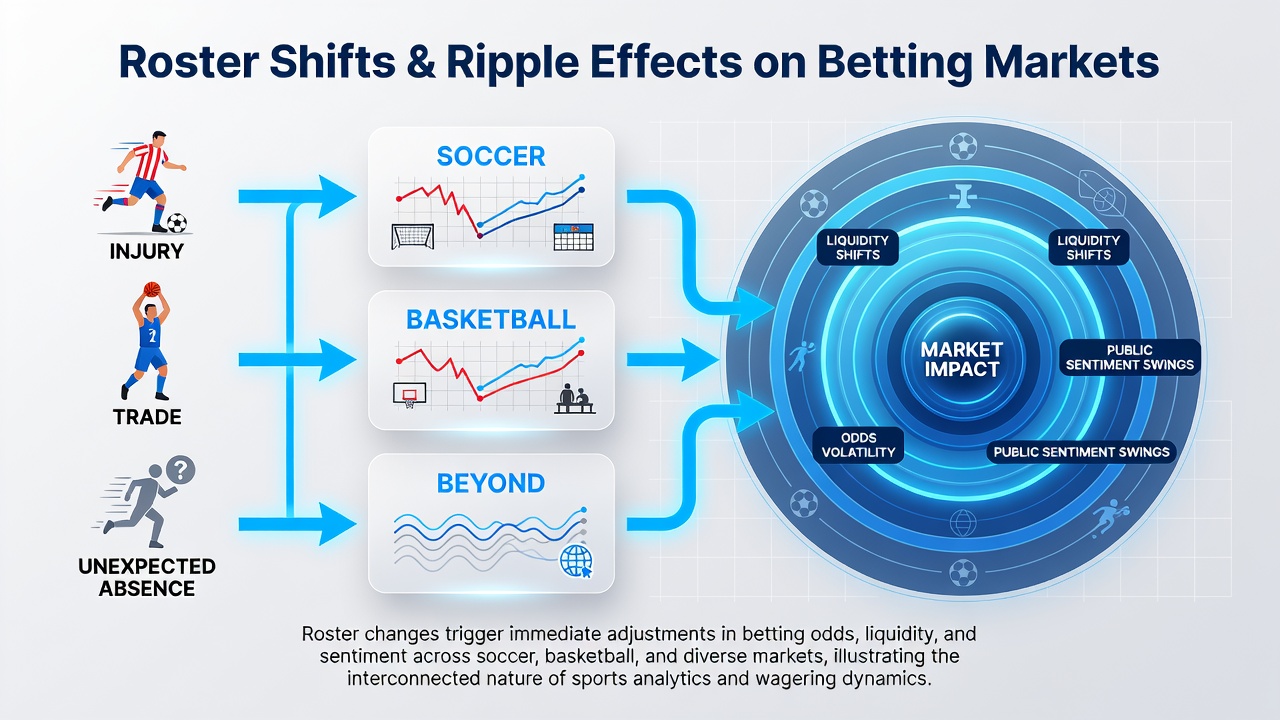
Trades executed near the February deadline introduce longer-term ripple effects that extend into playoff markets. A team acquiring a new starting guard sees immediate adjustments in both team totals and individual performance lines, while opposing defenses receive updated efficiency ratings. Figures released by North American gaming regulators demonstrate elevated handle on these modified markets during the weeks following major transactions, as participants incorporate new usage rates into their models.
Broader Impacts Across Additional Sports
Baseball and hockey markets display comparable sensitivity to roster announcements, although the timing and scale differ from soccer and basketball. Pitching changes in Major League Baseball shift run totals more dramatically than most other variables, and hockey line combinations affect both goal-scoring projections and special-teams betting options. Industry data indicates that minor-league call-ups or sudden retirements generate smaller but still detectable movements, particularly in lower-volume markets where liquidity remains limited.
Cross-sport correlations appear when athletes participate in multiple betting categories simultaneously. A soccer midfielder who also features in fantasy formats sees correlated action across platforms, and regulatory filings from Canadian provincial authorities document how these overlaps amplify volume during international tournament windows. Observers tracking global betting flows note that such interconnected markets transmit roster information faster than isolated domestic competitions.
Timing, Volume, and Regulatory Context
Betting activity spikes immediately after roster disclosures, then gradually settles as additional information reaches the market. Government reports from Australian state regulators show that peak volatility occurs within the first thirty minutes following an announcement, after which lines stabilize unless further updates emerge. This pattern holds across soccer, basketball, and other covered sports, with higher-stakes events exhibiting larger absolute movements even when percentage shifts remain consistent.
Operators adjust risk-management protocols in response to these patterns, often tightening limits on certain props while expanding others to balance exposure. Academic analyses of historical datasets confirm that markets incorporating real-time roster feeds exhibit narrower margins over time compared with slower-reacting venues, although individual bettor outcomes vary based on access to timely data sources.
Conclusion
Roster shifts continue to drive measurable changes in betting markets for soccer, basketball, and additional sports, with effects documented through regulatory filings, academic research, and industry tracking systems. The timing of announcements, combined with the scale of each change, determines both the direction and magnitude of subsequent odds movements, while bettors and operators alike incorporate these signals into ongoing risk and strategy decisions. Patterns observed through 2026 demonstrate consistent responses across regions and competition types, underscoring the direct link between personnel updates and market behavior.